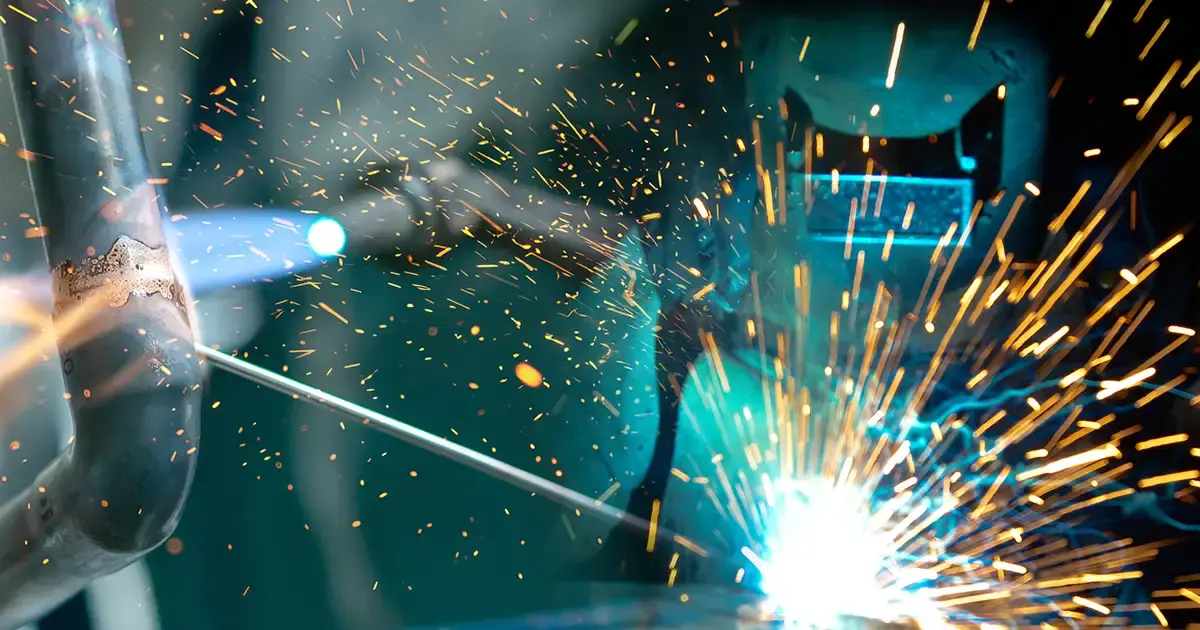
For those entering the HVAC field, understanding acetylene and oxygen welding equipment is foundational to success in the trade. These torches utilize gas to produce a high-temperature flame capable of brazing and soldering copper tubing, which are essential tasks in refrigerant line installation and repair. It should come at no surprise that working with welding equipment in the field requires rigorous training, licensing, and certification.
Welding and brazing equipment consists of gas cylinders, regulators to control gas flow and pressure, hoses that deliver the gases to the torch handle, and specialized tips that create the proper flame characteristics for different applications.
The chemistry behind the equipment is what makes it so effective for HVAC work. The intense heat of the flame, which can exceed 5,600 degrees Fahrenheit, allows HVAC technicians to join copper refrigerant lines with silver-bearing brazing alloys, creating leak-proof connections that can withstand the pressures and temperatures of modern refrigeration systems.
Unlike arc welding used in structural metalwork, acetylene and oxygen torches provide the precise heat control necessary for working with thin-walled copper tubing without burning through the material.
Understanding the Certifications, Licensing and OSHA Requirements For Using Acetylene or Oxygen Torches in the Field
The regulatory landscape surrounding torch use in HVAC work varies significantly across Ohio, Indiana, Kentucky, and West Virginia, though certain federal standards apply universally. OSHA's 29 CFR 1910.253 establishes baseline safety requirements for oxygen-fuel gas welding and cutting operations, mandating proper equipment maintenance, cylinder storage, and ventilation standards that apply regardless of which state you're working in.
These regulations aren't merely bureaucratic formalities, they exist because compressed gas cylinders and open flames present genuine hazards when handled improperly.
In Ohio, HVAC contractors must hold the appropriate contractor's license through the Ohio Construction Industry Licensing Board for work involving refrigerant systems. While Ohio doesn't have a separate state-level welding certification requirement specifically for HVAC torch work, contractors are expected to ensure their employees receive adequate training in safe equipment operation.
EPA Section 608 certification is mandatory for anyone working with refrigerants, and while this certification doesn't directly address torch use, the brazing skills necessary to create refrigerant line connections are integral to the work these certified technicians perform.
Kentucky's regulatory framework similarly requires HVAC contractors to obtain proper licensing through local jurisdictions or the state, depending on the scope of work. The Kentucky Department of Housing, Buildings and Construction oversees HVAC contractor licensing in many municipalities.
Training programs that include torch operation are typically required components of apprenticeship programs or technical school curricula that prepare individuals for licensure. The emphasis is on comprehensive trade education rather than standalone welding certifications for those working specifically in HVAC applications.
Indiana's approach to HVAC licensing varies by municipality, with larger cities like Indianapolis maintaining their own contractor licensing requirements. Throughout the state, the expectation remains that contractors demonstrate competency in all aspects of HVAC installation and service, including brazing and soldering with acetylene and/or oxygen equipment.
Many Indiana employers require documentation of formal training through vocational programs, community colleges, or manufacturer-sponsored courses that include hands-on torch operation under qualified instruction.
West Virginia requires HVAC contractors to obtain licensure through the West Virginia Division of Labor, Contractor Licensing Board. The licensing process evaluates a contractor's knowledge of trade practices, which necessarily includes proper refrigerant line installation techniques using brazing torches.
Apprenticeship programs registered with the West Virginia Division of Labor often provide the structured training environment where aspiring HVAC professionals gain supervised experience with acetylene and/or oxygen equipment before working independently.
Beyond state-specific requirements, insurance considerations often drive additional certification expectations. Many liability insurance carriers require documentation that employees have completed recognized training programs in acetylene and oxygen torch operation. These insurance requirements serve as a practical enforcement mechanism ensuring that contractors invest in proper employee training.
Some organizations serving the HVAC trade offer certifications that, while not legally mandated, demonstrate proficiency to employers, customers, and insurance providers.
The training necessary to meet these various requirements typically encompasses both classroom instruction and supervised practical experience. Quality programs cover gas cylinder safety, proper equipment assembly and inspection, regulator operation, flame adjustment techniques, appropriate brazing rod selection, and flux application when needed.
Students learn to recognize potential hazards including backfire, flashback, and improper cylinder handling. Understanding why specific procedures exist, not just memorizing steps, enables technicians to adapt safely to varying field conditions.
Essential Safety Protocols Every HVAC Contractor Must Follow
Safety protocols surrounding acetylene and oxygen torch use aren't arbitrary rules but rather practices developed through decades of field experience and incident analysis. Compressed gas cylinders contain gases under extreme pressure, acetylene cylinders typically operate at around 250 psi when full, while oxygen cylinders can exceed 2,000 psi.
These pressures demand respect and proper handling procedures. Cylinders must always be secured in an upright position, properly chained or strapped to prevent tipping, and stored away from heat sources, electrical panels, and incompatible materials.
Personal protective equipment requirements for torch work extend beyond what's necessary for many other HVAC tasks. Safety glasses with appropriate shade protection shield eyes from the intense light and potential sparks generated during brazing operations.
Welding gloves protect hands from heat, molten metal, and hot materials. Fire-resistant clothing prevents ignition from stray sparks or contact with hot surfaces. In confined spaces or poorly ventilated areas, respiratory protection may be necessary to prevent inhalation of fumes from brazing alloys, flux, or base metal coatings.
Proper equipment inspection before each use represents a non-negotiable safety practice. Hoses should be examined for cracks, burns, or deterioration that could lead to gas leaks. Regulators must function smoothly without sticking or erratic pressure readings. Torch tips should be clean and free of carbon buildup that can cause unstable flames or backfire conditions. Flashback arrestors, devices that prevent flame from traveling back into the hoses and cylinders, should be installed and periodically inspected. These checks take only minutes but can prevent catastrophic equipment failures.
Work area preparation is equally critical to personal safety protocols. The area within a 35-foot radius of torch operations should be cleared of flammable materials including cardboard, paper, wood, and combustible liquids. Fire extinguishers rated for Class B and C fires must be immediately accessible.
When working in occupied structures, considerations include protecting finished surfaces from heat damage, ensuring adequate ventilation, and notifying building occupants about hot work activities. Many jurisdictions require hot work permits for torch operations in commercial buildings, another regulatory layer that reinforces the serious nature of this work.
Gas cylinder handling procedures deserve particular emphasis given the consequences of improper practices. Acetylene cylinders should never be stored or used on their side because the acetone solvent inside can escape into the regulator and hoses, creating dangerous conditions.
Cylinder valves should be opened slowly, and the operator should never stand directly in front of the regulator when opening cylinder valves. After use, cylinder valves must be closed, pressure released from regulators and hoses, and protective caps replaced on cylinders. These procedures prevent gradual leaks that create fire or asphyxiation hazards.
Understanding the emergency response procedures for various scenarios completes the safety knowledge foundation. Technicians must know how to respond to hose fires, flashback events, gas leaks, and cylinder valve failures.
This knowledge goes beyond simply shutting off gases, it includes understanding when to evacuate, when equipment can be safely approached, and how to prevent small incidents from escalating.
The confidence to work safely with brazing and soldering equipment comes from comprehensive training that addresses both routine operations and emergency situations.
Brazing and Soldering Tools Available at 2J Supply
At 2J Supply, we understand that HVAC contractors throughout Ohio, Indiana, Kentucky, and West Virginia need reliable access to quality brazing and soldering equipment that meets the demanding conditions of field service work.
Our inventory includes brazing and soldering torch kits, replacement tips, regulators, hoses, and consumables from manufacturers known for durability and performance. We recognize that equipment failure on a job site doesn't just cost time, it can mean lost revenue, disappointed customers, and compromised system installations.
The range of brazing alloys and fluxes 2J stocks reflect the diverse applications HVAC professionals encounter. Silver-bearing brazing alloys with different percentages of silver content offer varying flow characteristics, strength properties, and price points appropriate for different applications.
Whether you're working with residential split systems requiring 1/4-inch and 3/8-inch line sets or commercial equipment with larger diameter refrigerant lines, having access to the proper filler metals ensures code-compliant, leak-free connections. Flux formulations designed specifically for copper-to-copper brazing help prevent oxidation during heating, promoting proper capillary action and joint formation.
Beyond the consumables, our selection includes the ancillary equipment that makes torch work more efficient and safer. Striker igniters provide reliable flame lighting without the hazards of matches or lighters. Tip cleaners maintain proper orifice dimensions for consistent flame characteristics.
Leak detection solutions help verify proper equipment assembly before introducing flame. Regulators with appropriate pressure ranges and flow capacities ensure optimal torch performance across different applications. These supporting products might seem incidental, but they contribute significantly to work quality and technician safety.
2J Supply's customer service approach recognizes that product availability is only part of the value equation. HVAC contractors working throughout 2J Supply's four-state service area need a supplier who understand their operational realities, tight project timelines, weather-dependent schedules, and the economic pressures of competitive bidding.
Our commitment includes maintaining inventory depth so that common items are consistently available, providing knowledgeable support when product selection questions arise, and processing orders efficiently to minimize downtime when equipment needs replacement.
Why the Harris Port-A-Torch is a Great Kit
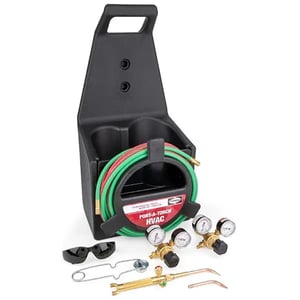 The Harris 4400177 Port-A-Torch Welding and Brazing Outfit, available at 2J Supply, represents the type of practical, field-ready equipment that makes sense for HVAC professionals building their tool inventory or upgrading existing capabilities. This compact kit addresses a fundamental challenge in service work, the need for portability without sacrificing performance.
Unlike full-size acetylene and/or oxygen welding and brazing outfits with large cylinders that work well in shop environments, the Port-A-Torch system uses disposable fuel cylinders that eliminate the logistics of cylinder exchanges and rental fees while maintaining the heat output necessary for brazing copper refrigerant lines.
The kit's compact footprint provides genuine advantages for the service truck organization that every HVAC contractor must master. Space in a service vehicle is valuable real estate. Every cubic foot consumed by equipment is space unavailable for replacement parts, specialty tools, or additional materials.
The Port-A-Torch kit stores efficiently, reduces overall vehicle weight, and can be easily carried to rooftop installations, basement mechanical rooms, or attic air handler locations without the awkwardness of full-size cylinder carts. This accessibility means technicians spend less time transporting equipment and more time completing productive work.
From a practical standpoint, the disposable cylinder approach offers specific benefits for contractors managing multiple service vehicles. There's no need to track cylinder rental accounts, schedule cylinder exchanges, or manage the return logistics for empty cylinders.
Technicians can carry several disposable cylinders in their truck, ensuring they have adequate fuel for multiple service calls without returning to the shop. When a cylinder is exhausted, it's simply replaced with a fresh one, a straightforward process that doesn't interrupt workflow or require coordination with gas suppliers.
The Harris 4400177 Port-A-Torch includes the components necessary for immediate productivity, the torch handle, appropriate tips for HVAC brazing applications, hoses, and the regulator assembly designed for use with disposable cylinders.
This completeness matters for contractors equipping new technicians or expanding their service fleet. Rather than sourcing individual components from multiple suppliers and ensuring compatibility, the kit provides an integrated solution from a respected manufacturer with a long history in the welding and brazing equipment market.
For contractors working across Ohio, Indiana, Kentucky, and West Virginia, having equipment sourced from 2J Supply offers the additional advantage of local support and service. When questions arise about proper kit setup, tip selection for specific applications, or troubleshooting performance issues, our team understands the regional market and the typical applications our contractor customers encounter.
This relationship extends beyond a simple vendor-customer transaction to become a partnership supporting your business operations and growth in the HVAC trade.