How Flex Duct Quality Impacts HVAC Airflow, Efficiency, and Long‑Term System Performance

Flex duct is one of the most widely used materials in residential and light commercial HVAC systems, but it’s also one of the most overlooked when diagnosing airflow issues. The quality of the flex duct you install and how consistently it performs from roll to roll has a direct impact on static pressure, comfort, and system efficiency.
This guide breaks down why flex duct quality matters, how it affects real world performance, and what contractors should look for when choosing materials.
Why Flex Duct Quality Matters for Airflow
Airflow is the backbone of HVAC performance. Even a perfectly sized system can struggle if the ductwork introduces unnecessary resistance. Flex duct can contribute to airflow loss when:
- The inner core collapses or varies in rigidity
- The duct compresses during installation
- The jacket tears or stretches unevenly
- The material behaves differently from one roll to the next
These inconsistencies increase static pressure, reduce delivered airflow, and can lead to comfort complaints or callbacks.
How Material Consistency Reduces Static Pressure
A smooth, stable inner core helps maintain laminar airflow. When the core varies in thickness or rigidity, airflow becomes turbulent, increasing resistance. Consistent flex duct construction helps ensure:
- Predictable airflow performance
- Easier system balancing
- More accurate load calculations
- Reduced strain on blowers and motors
Contractors often report that consistent flex duct makes installs faster because they don’t have to fight the material to get the run shaped correctly.
Durability and Jobsite Handling
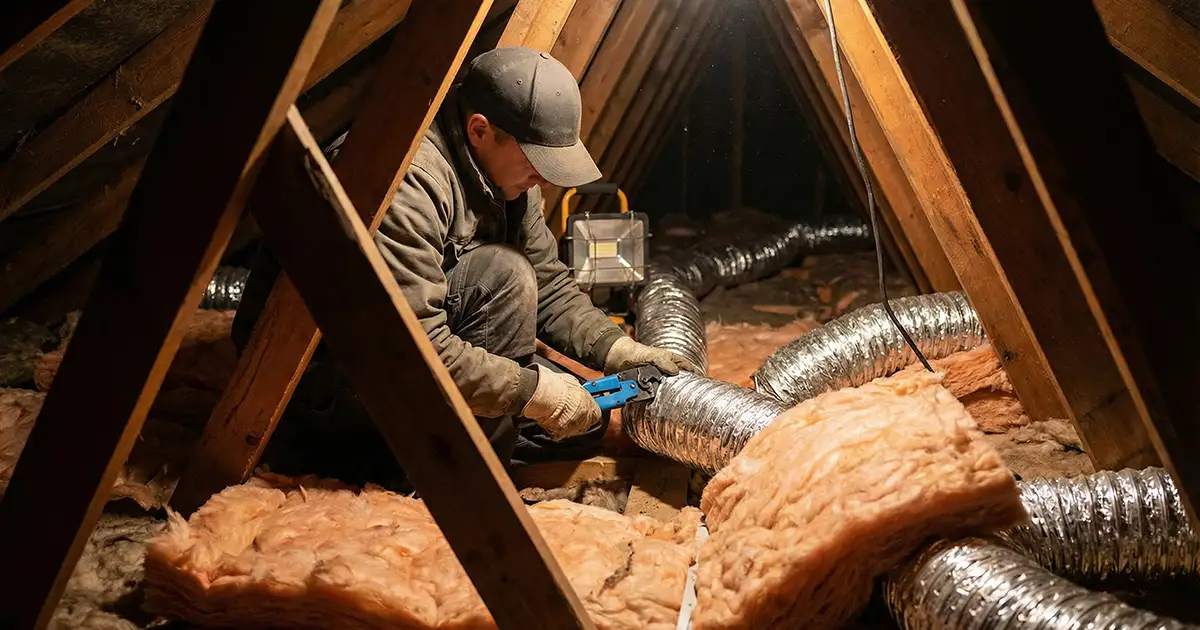
Flex duct doesn’t live a gentle life. It’s dragged through attics, pulled around framing, and squeezed into tight spaces. Material durability affects:
- Whether the duct kinks or collapses
- How well it holds shape over time
- Resistance to tears, punctures, and compression
- Long term airflow stability
A tougher outer jacket and reinforced core help prevent damage that may not be visible but still restricts airflow.
Installation Best Practices That Improve Performance
Even high quality flex duct can underperform if installed poorly. In order to achieve the best possible performance, contractors should:
- Keep runs as straight as possible
- Avoid compression; every inch matters
- Support the duct at proper intervals
- Ensure tight, sealed connections
- Avoid sharp bends that collapse the core
These fundamentals help maintain the airflow the system was designed to deliver.
2J Supply stocks ATCO high quality flex duct to ensure customer installations start with the best foot forward. ATCO’s flex duct is frequently cited by contractors for its consistent performance across rolls and job site durability. Its stable inner core and durable jacket help reduce the variability that can cause airflow issues. While many brands exist, ATCO is one that installers often trust for predictable handling and long term performance.
Flex duct may not be the most glamorous part of an HVAC system, but it plays a major role in airflow, efficiency, and customer satisfaction. Choosing consistent, durable material, such as ATCO’s flex duct, and installing it correctly helps ensure the system performs the way it was designed.